Composition and Framing

Students don't need to begin photography by learning what every button on a camera does.
They need to begin by making a choice.
Every photograph starts with a rectangle. The moment a student raises a camera or smartphone, they have to decide what belongs inside that rectangle—and what doesn't.
That simple decision is framing, and it may be the best place to begin teaching photography.
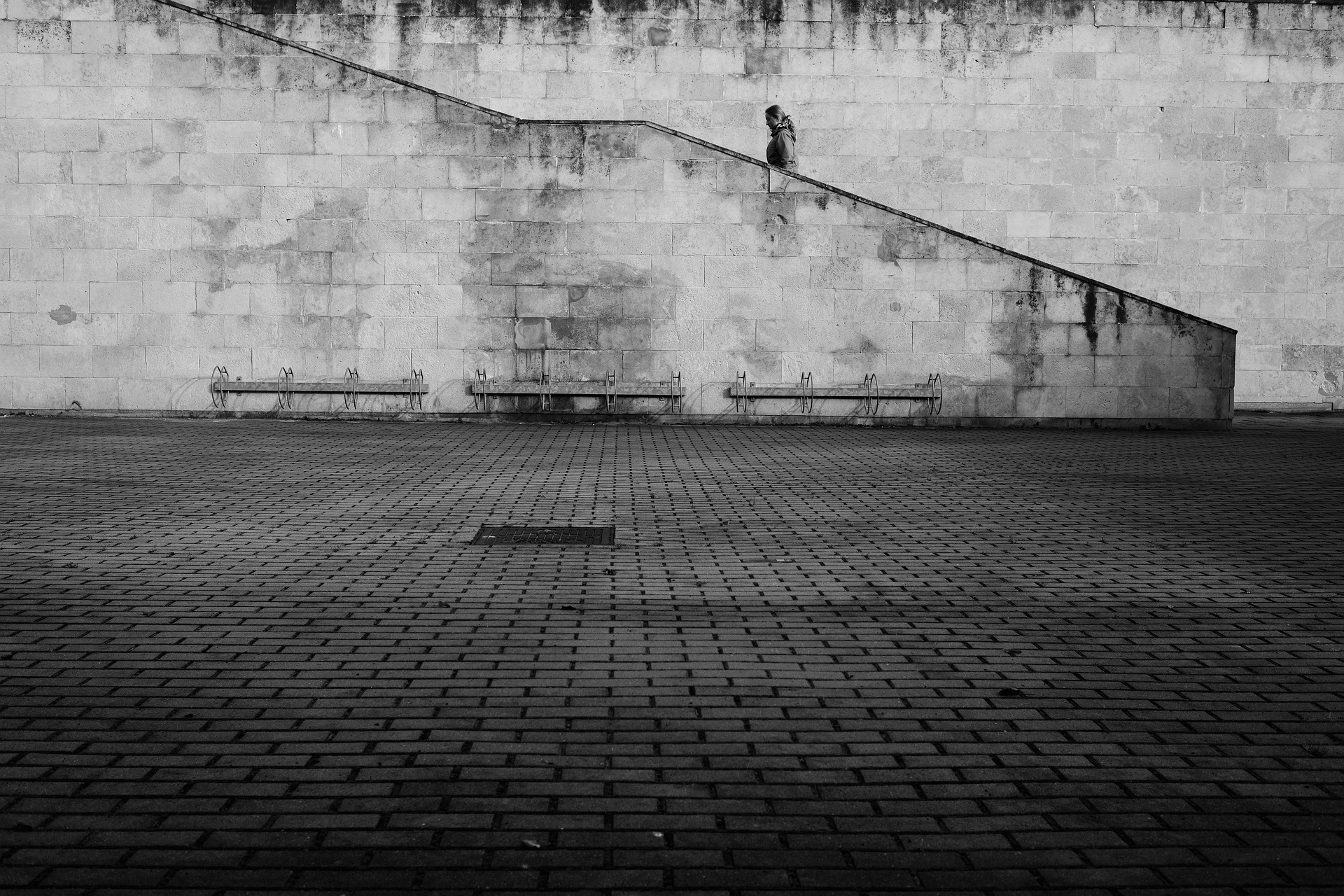
A photograph is a decision
Ask students to stand in one place and look around the room. There may be desks, windows, backpacks, books, other students, light coming through a doorway and hundreds of small details competing for attention.
Now ask them to take a photograph.
Something changes.
They can't photograph everything. They have to choose.
Do I photograph the entire room or one desk? Do I include the window? Should I move closer? What happens if I turn the camera vertically? What if I crouch down? What should I leave out?
Photography turns looking into decision-making.
A photograph doesn't simply record what's in front of you. You decide what the viewer sees.
That's an important idea for a beginning photographer because it shifts the student's role. They are no longer simply pointing a camera at something interesting.
They are responsible for the photograph.

Before camera settings, teach students to move
Beginning photography can quickly become technical: aperture, shutter speed, ISO, focus modes and camera controls.
Those things have their place. But students can make substantially different photographs before changing a single camera setting.
Have them change themselves instead.
Move closer. Step back. Get lower. Move to the side. Turn the camera. Look behind the subject. Pay attention to the edges.
Then take another photograph.
This gives students something they can understand immediately: where I put the camera changes the photograph.
And because this works with a DSLR, mirrorless camera or smartphone, the lesson isn't dependent on equipment.

The edges of the photograph matter
Beginning photographers naturally concentrate on the subject.
They see their friend, a flower, a bicycle or a dog and aim directly at it.
But photographers eventually learn to see the entire rectangle.
What's happening behind the subject? What's creeping into the corner? Is something cut awkwardly in half? Is there empty space that helps the photograph—or space that serves no purpose?
This is where framing becomes more than putting a subject inside a picture.
Students begin asking:
Does everything inside this photograph need to be here?
That's a sophisticated question hiding inside a very simple activity.

Try one subject five ways
Give each student one ordinary subject. It could be a chair, plant, backpack, shoe, doorway or anything else available.
Don't ask for one good photograph.
Ask for five different photographs.
For example:
- Move closer — fill the frame and eliminate distractions.
- Step back — show the subject in its surroundings.
- Change your angle — photograph it from above, below or from the side.
- Find a frame within the frame — use a doorway, window, branches or another object.
- Choose what stays out — deliberately eliminate something distracting.
Now put the five photographs together.
The subject didn't change.
The photographer did.
That's the lesson.

Framing teaches more than composition
Something larger begins happening when students understand this.
They start noticing.
Instead of walking around waiting for something obviously photogenic to appear, they begin testing possibilities.
What happens from here?
What if I move over there?
What if I leave that out?
What if I only show this part?
That curiosity is important because it establishes a habit that can carry into everything students learn next.
Patterns and repetition will ask them to notice visual relationships.
Leading lines will ask them to direct attention.
Minimalism will ask them to remove distractions.
Close-up photography will ask them to investigate details.
Light and shadows will ask them to notice things they may previously have walked past.
But framing comes first because every one of those photographs still requires the same fundamental decision:
What am I asking someone else to look at?

From taking pictures to making photographs
Most students already know how to take a picture.
That's precisely why photography education doesn't have to begin with the mechanics of taking one.
It can begin with intention.
Give students permission to move. To experiment. To make one photograph, look at it, change something and make another. Ask them why they included something. Ask them why they excluded something. Ask what they want another person to notice first.
Gradually, pressing the shutter becomes the last step rather than the first.
That's the progression we're looking for:
I can take a picture → I can intentionally choose a picture.
And that's a very good place to begin teaching photography.
More from picture power



recommended for you
7 Low Light Digital Photography Tips
The test of a good photographer is not how well they shoot in good light, but how they handle a low-light situation. Here are some basic tips on shooting low light digital photography.
Engagement Photo Ideas For Wedding Photographers And Couples
Whether you use props, matching outfits or a unique setting, get inspired with these engagement photo ideas.
Fun Photography Ideas | Tips for photographing toys and memorabilia
These fun photography ideas can turn a boring day into a day of adventure. Give your toys the attention they deserve and learn how to think like a cinematographer.



A COMPLETE PHOTOGRAPHY TEACHING KIT
**BRAND NEW FOR 2026!






Search
Picture Power