Photography in Education
Photography In Education: What If Students Could Photograph The Answer?
When we think about photography in education, we usually think about teaching photography.
Composition. Lighting. Camera controls. Maybe a photography class or yearbook project.
But there is another way to think about it:
What if we used photography to teach everything else?
Math. Science. History. Language arts. Social studies.
Students don't necessarily need to learn photography for photography to become a useful part of their education.
Sometimes they just need a camera and a question.
It's the learning tool.
In practice
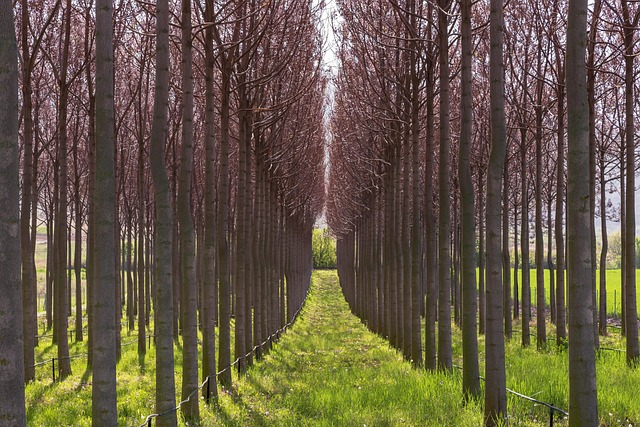
Imagine you're teaching symmetry.
You could explain symmetry, show examples and give students a worksheet.
Or you could say:
“Find and photograph three examples of symmetry.”
Now something different happens.
Students have to look.
They might photograph a window, a leaf, a basketball court, a building or another object in the classroom.
But they can't photograph just anything.
They have to understand the concept well enough to recognize it in the world around them.
That's where photography in education gets interesting.
The camera isn't the subject.
It's the learning tool.
From Looking to Learning

Consider how easily the same idea moves across the curriculum.
Science
Instead of:
What is erosion?
Try:
"Photograph evidence of erosion."
Then ask the student to explain what in the photograph supports the answer.
Math
Instead of:
Identify geometric shapes.
Try:
"Find and photograph five geometric shapes in the world around you."
Social Studies
Instead of:
How do people use public spaces?
Try:
"Take three photographs showing different ways people use public spaces in your community."
Language Arts
Instead of simply defining metaphor, mood or conflict, challenge students to create a photograph representing one of those ideas.
Then ask:
"Why did you make this photograph?"
History
Ask students to photograph an old building, object, monument or neighborhood feature.
Then ask:
"What can this tell us about the people who came before us?"
The photograph becomes the beginning of the investigation rather than the end of the assignment.

the photo is not the final answer
Here's the important part.
Taking the picture isn't enough.
Ask:
“What does your photograph prove?”
Now the student has to connect observation with knowledge.
"Why does that photograph demonstrate symmetry?"
"What evidence of erosion can you actually see?"
"What does that building reveal about the past?"
"Why does this image represent conflict?"
A student has to observe, choose, photograph and explain.
Photography creates the evidence.
The student's reasoning gives the evidence meaning.
The Smartphone Becomes an Observation Tool
There is an understandable debate about smartphones in schools.
They can distract students from learning.
But the camera inside the smartphone can also be used to direct a student's attention toward learning.
That's an important distinction.
Tell a student:
“Take a picture.”
That's photography.
Tell a student:
“Take a picture that proves this is happening.”
That's observation, interpretation and critical thinking.
The smartphone hasn't changed.
The purpose has.
You do not have to teach photography
This may be the biggest misconception surrounding photography in education.
A teacher doesn't necessarily need to know photography.
Students don't need expensive cameras.
You don't need to explain shutter speed, aperture or ISO.
And you don't need to add a photography unit to an already crowded curriculum.
Start with something you're already teaching.
Then ask yourself:
"Can my students find evidence of this with a camera?"
If they can, you have a photography assignment.
It might take ten minutes.
Try It Tomorrow
Choose one concept you're already teaching.
Don't change the lesson.
Change one question.
Instead of asking students only to tell you the answer, ask them:
"Can you photograph the answer?"
Then ask them to explain what their photograph shows.
That's it.
The camera gives students a reason to look more carefully at the world around them.
And once they begin looking for evidence of what they're learning, something important happens.
Math isn't only in the math book.
Science isn't only in the science classroom.
History isn't confined to the past.
Language isn't confined to words.
The subjects we teach are happening all around us.
Students simply need to learn how to see them.
That may be one of the most useful roles for photography in education.
Photography TEACHING & ACTIVITIES KIT (Printables)

Jump right into teaching photography with our exclusive Photography Teaching & Activities Kit
Includes:
- 10 Photography Lesson Plans
- Teacher's Guide
- Student Workbook
- 3 Photography Study Guides
- 30-Day Photography Challenge
- 52 Cut-Out Photo Flash Cards
- Photo Scavenger Hunt
More from picture power


recommended for you
7 Low Light Digital Photography Tips
The test of a good photographer is not how well they shoot in good light, but how they handle a low-light situation. Here are some basic tips on shooting low light digital photography.
Engagement Photo Ideas For Wedding Photographers And Couples
Whether you use props, matching outfits or a unique setting, get inspired with these engagement photo ideas.
Fun Photography Ideas | Tips for photographing toys and memorabilia
These fun photography ideas can turn a boring day into a day of adventure. Give your toys the attention they deserve and learn how to think like a cinematographer.




A COMPLETE PHOTOGRAPHY TEACHING KIT
**BRAND NEW FOR 2026!



Search
Picture Power