Picture Power in the classroom
a homeschool activity for all ages

Finding homeschool activities that genuinely engage everyone can be difficult.
This is especially true in a homeschool co-op or community. Children may be different ages, working at different academic levels, and bringing very different personalities to the group. Some jump into every discussion. Some would rather move than sit. Others prefer to watch quietly before contributing.
Many group activities ask children to follow the same instructions and work toward a similar result.
Photography offers another possibility.
Give children the same subject and each one can discover something entirely their own.
An Activity Everyone Can Enter at Their Own Level

Imagine giving a group of children one simple assignment:
Photograph three signs of change.
A younger child might notice a flower beginning to bloom. Another might photograph melting ice or a half-built bird’s nest. An older child might document a construction site, an aging building, or signs that the season is changing.
Everyone begins with the same prompt, but no one is expected to produce the same answer.
That makes photography especially useful for mixed-age homeschool groups. Younger children can participate through simple observation and exploration. Older children can investigate ideas more deeply, conduct research or use their photographs as evidence in a written assignment.
They can learn beside one another without having to learn in exactly the same way.
Photography Turns Children Into Active Learners
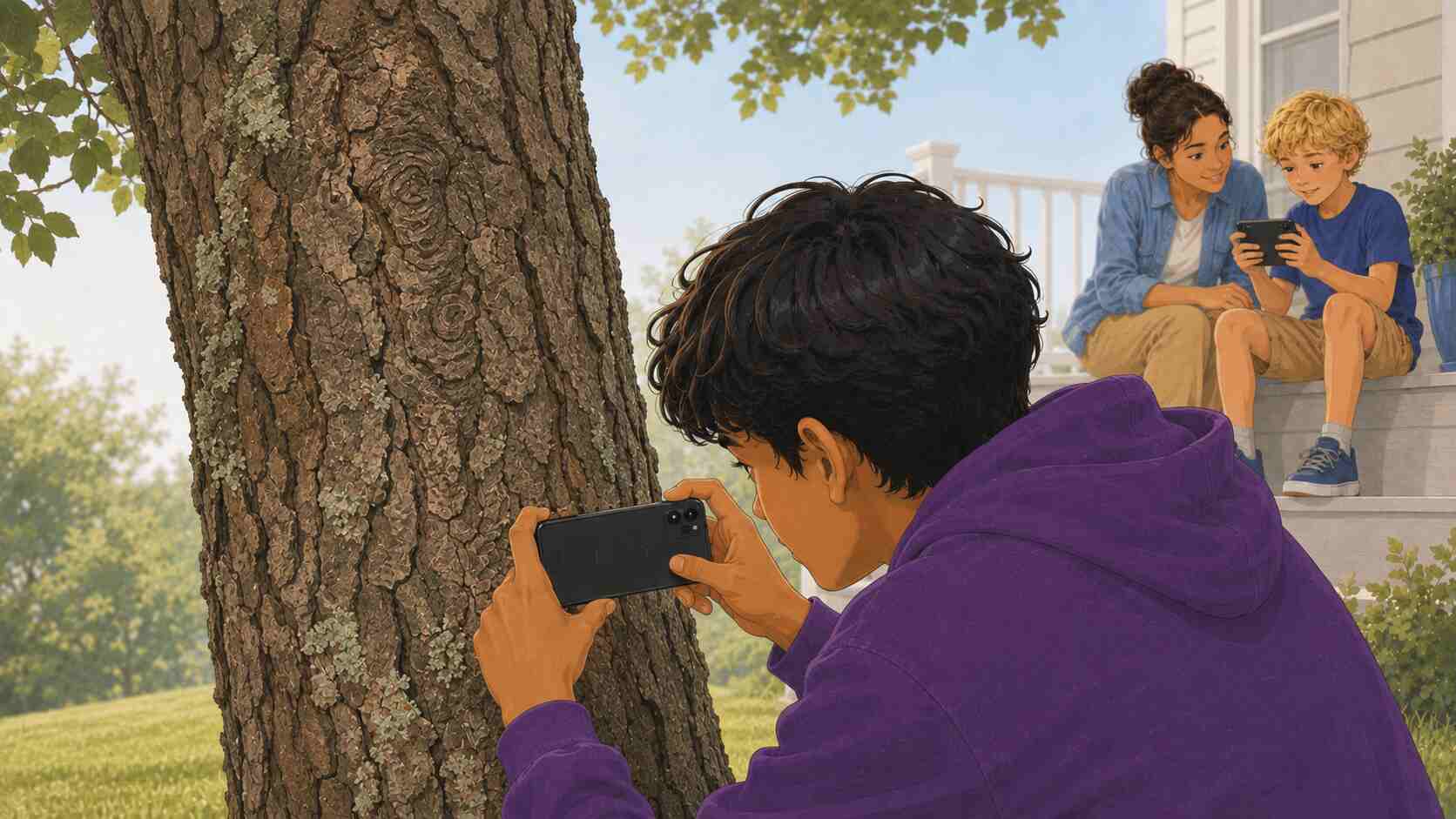
Children receive information all day. They read it, hear it, and watch it.
But receiving information is not the same as engaging with it.
Photography gives children something to look for. Instead of simply being told about patterns, change, evidence or perspective, they must find examples for themselves.
The camera gives the activity a purpose:
- Find something others might overlook.
- Show a pattern in nature.
- Photograph evidence of the past.
- Tell a story in three pictures.
- Show the same subject from two different perspectives.
Now the child is not simply completing an assignment. The child is observing, choosing, questioning, and creating.
Photography turns “Pay attention” into something children can actually do.
One Homeschool Activity Can Connect With Many Subjects

Photography may sound like an art elective, but it can support learning across the homeschool curriculum.
In science, children can document plant growth, weather, ecosystems, motion, or the stages of an experiment.
In math, they can search for shapes, symmetry, angles, patterns and scale in the world around them.
In language arts, photographs can inspire descriptive writing, character development, sequencing and storytelling.
In history and social studies, children can photograph old buildings, public spaces, community roles and objects that reveal how people live.
A simple photo walk can begin with observation and lead into research, writing, discussion or a longer project.
This flexibility makes photography a useful addition to your homeschool activities. It does not have to compete with the subjects you are already teaching. It can become a tool for exploring them.
Photography Gives Every Child Something to Contribute
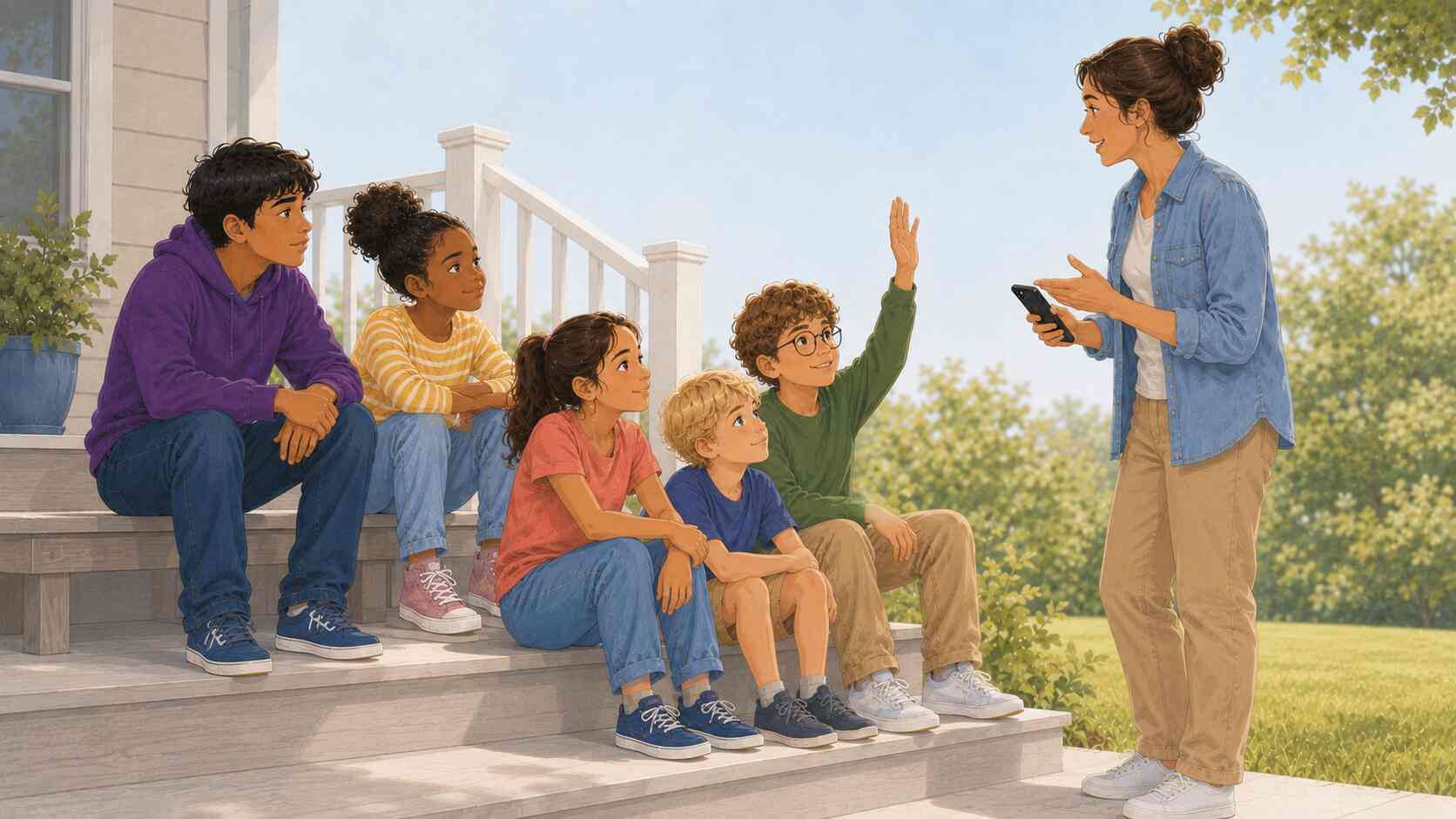
The learning does not end when the photographs are taken.
Bring the group together and ask each child to share one image. They will quickly discover that someone else noticed something they missed.
One child photographed the whole scene. Another moved closer to a small detail. Someone saw a problem. Someone else saw possibility.
These differences create natural conversations about perspective.
Children practice explaining what they noticed and why they made a particular choice. They learn to listen to other interpretations and recognize that two people can look at the same subject without seeing the same thing.
Photography also gives quieter children a concrete way to enter the conversation. Instead of being asked to speak about an abstract idea, they can begin with:
“This is what I noticed.”
Their photograph gives them something of their own to contribute.
A Simple Activity for Your Homeschool Group
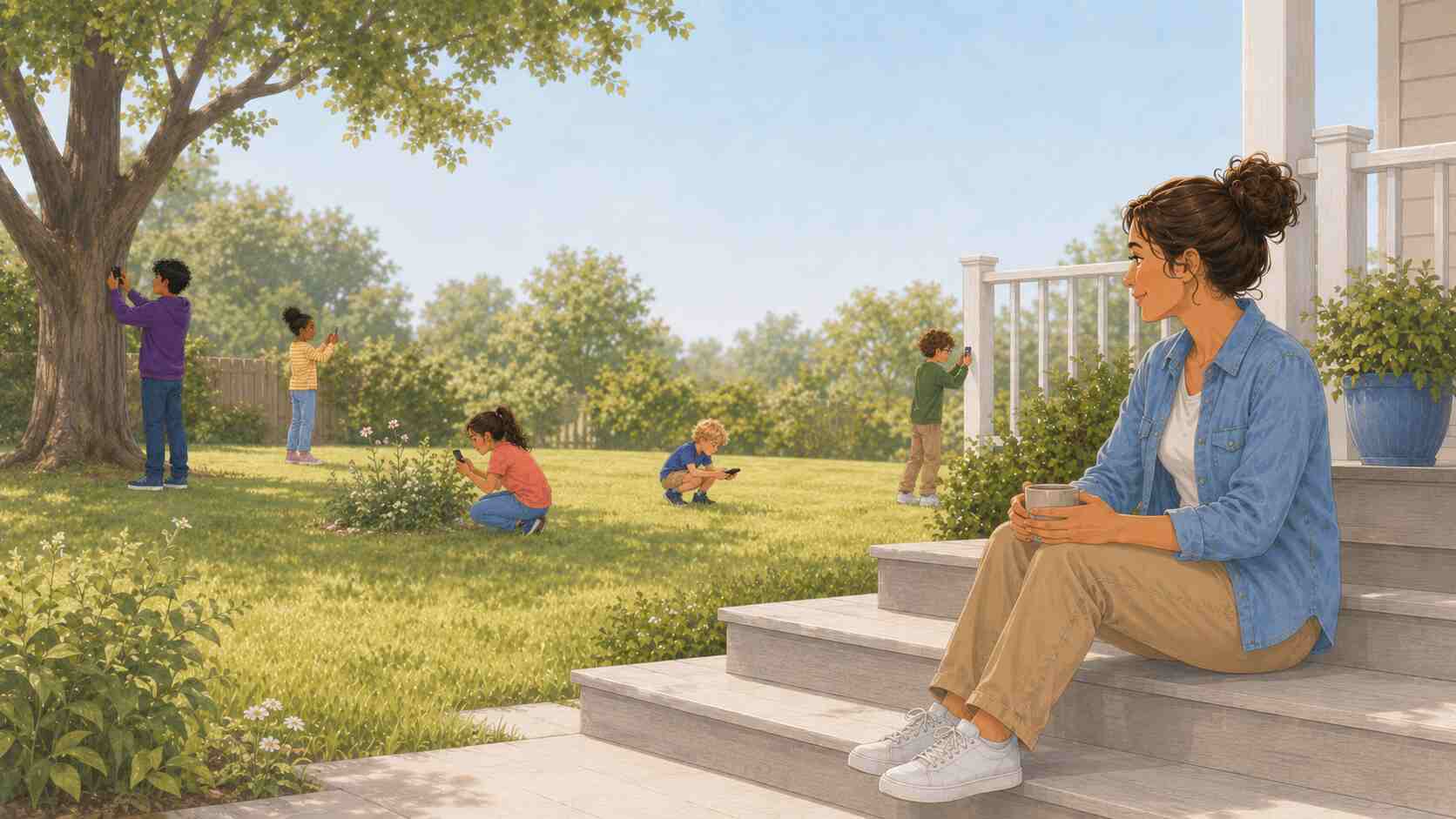
You can try photography with your children or co-op without creating an elaborate lesson.
Choose a prompt that can have many possible answers:
Photograph three things most people would walk past without noticing.
Give the children 15 to 20 minutes to explore. Any camera will work.
When everyone returns, ask each child to choose one photograph and answer three questions:
- What did you notice?
- Why did you photograph it this way?
- What might someone else see differently?
That one activity gives children practice in observation, decision-making, creative expression and communication. It can also become the beginning of a writing assignment, science investigation, neighborhood study or group discussion.
The important part is not whether the photographs are technically perfect.
The important part is that the children looked closely enough to find them.
Photography: A Valuable Tool for Homeschool Moms

Homeschool moms carry a demanding role. You are not only choosing what your children will learn. You are also finding ways to keep them curious, involved, and connected—to the subject, to one another, and to the world around them.
It works across ages. It connects naturally with different subjects. It gives active children a reason to move, quieter children a way to contribute and curious children permission to investigate.
You do not need to be a photographer to use it as a teaching tool. And you do not have to provide every answer.
You create the opportunity. You offer the prompt. You ask a few good questions.
Then the children do the looking, discovering, and sharing.
That is what makes photography so valuable for homeschool moms. It can turn an ordinary walk into an investigation, the backyard into a classroom, and a group of children into a community of observers.
You might even find yourself joining in—discovering something you would have walked past, simply because you gave yourself a reason to look.
Sometimes the activity you have been searching for is already in your pocket.
It is a camera—and a new reason to pay attention.
Photography TEACHING & ACTIVITIES KIT (Printables)

Jump right into teaching photography with our exclusive Photography Teaching & Activities Kit
Includes:
- 10 Photography Lesson Plans
- Teacher's Guide
- Student Workbook
- 3 Photography Study Guides
- 30-Day Photography Challenge
- 52 Cut-Out Photo Flash Cards
- Photo Scavenger Hunt
More from picture power



recommended for you
Teaching Photography to Kids
Teaching photography to kids is not that hard. To teach photography to kids you only need to know a little bit about two things. Light and composition.
How Do I Teach My Child Photography
Are you looking for an easy way to improve your child's creativity? Here are 5 easy steps to begin teaching photography to your children.
A Camera Doesn’t Just Teach Photography. It Teaches Students to Think
The smartphone has made photography universal. What remains largely untapped is its power to help students observe, think, and learn.



A COMPLETE PHOTOGRAPHY TEACHING KIT
**BRAND NEW FOR 2026!






Search
Picture Power